
Last updated November 14, 2026
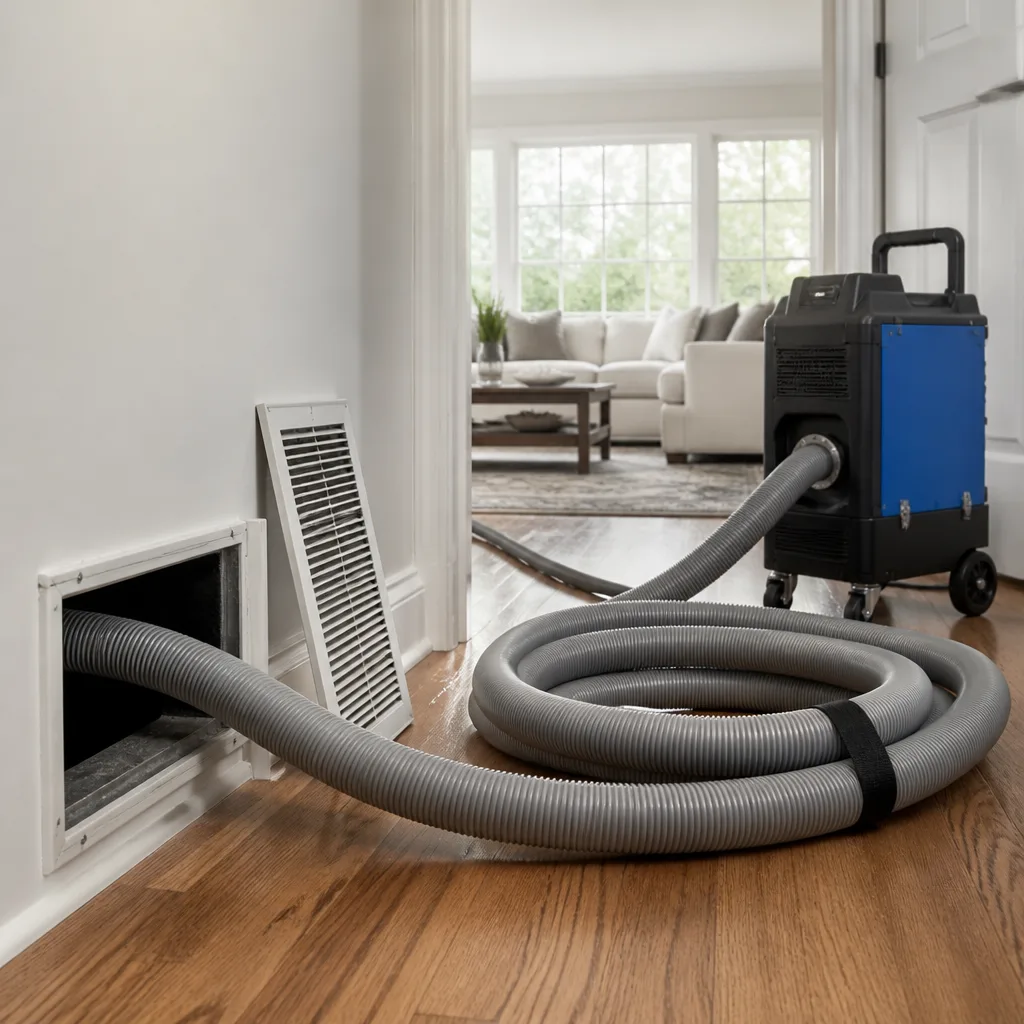 Whole-home duct cleaning
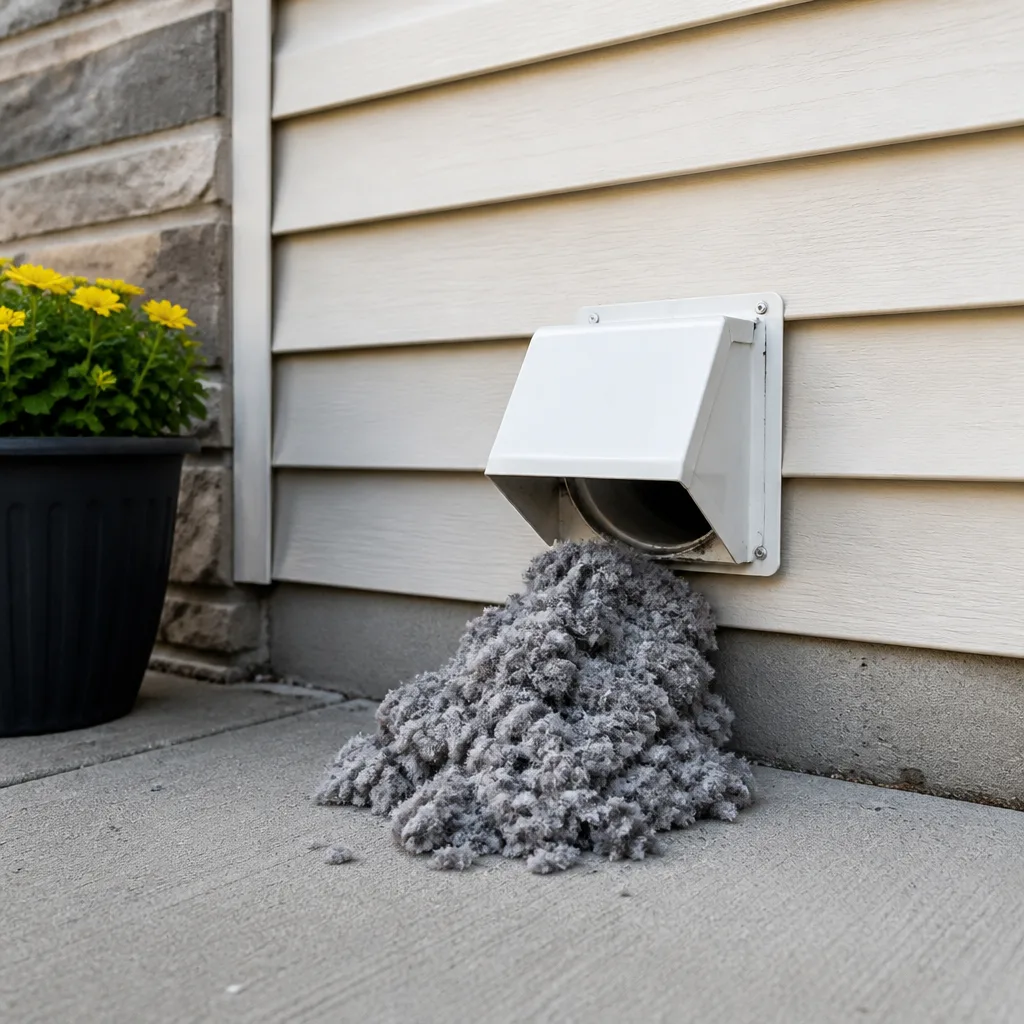 Dryer vent cleaning
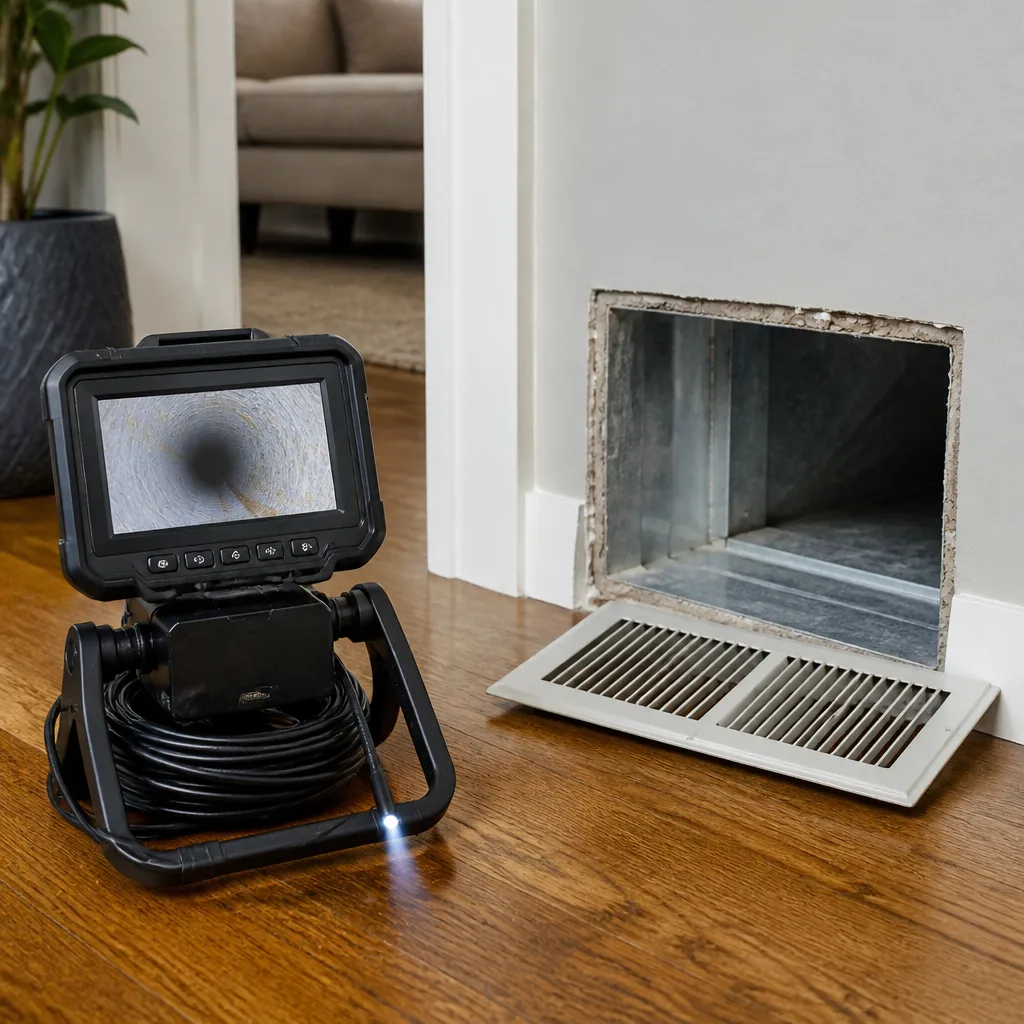 Camera inspection
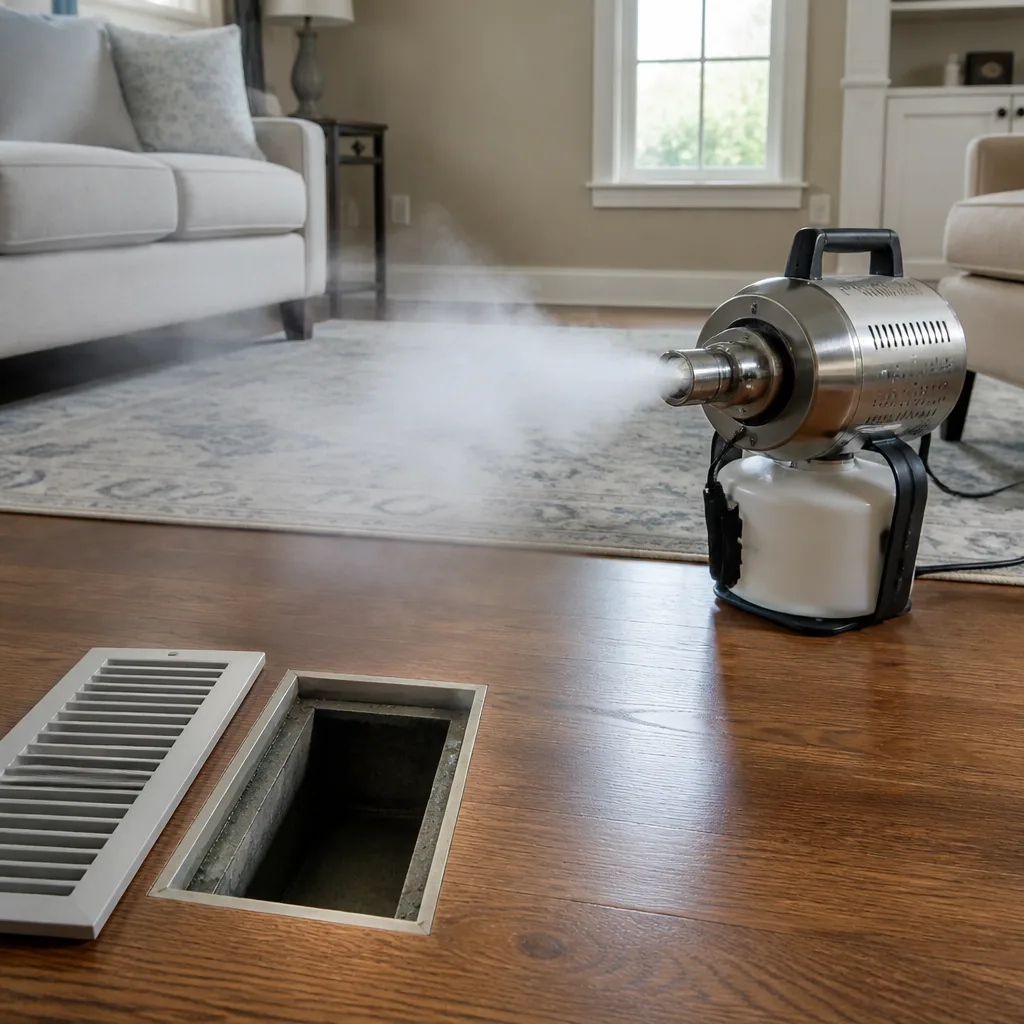 Sanitizing & deodorizing
Whole-system duct and dryer vent check with before-and-after photos - you see exactly what came out of your vents
That "$99 whole-house special" is a bait ad - the real number appears once they are in your hallway, or the "clean" is a shop-vac at the register. We photograph the inside of your ducts before and after instead.
Air Duct Cleaning Troubleshooting in Hillsboro: Common Problems and How to Fix Them
If changing your air filter every 60 days still leaves your house dusty, the filter isn’t the problem. Something upstream is shedding debris faster than any filter can capture it. That’s the part most homeowners miss: a filter protects the blower and coil from what’s already moving through the ducts, but it can’t fix a duct system that’s feeding itself a steady diet of dust, lint, and settled debris. The same logic applies to uneven airflow, musty smells, and rooms that never quite heat or cool like the rest of the house. In this guide we’ll show you how to read your system’s symptoms the way a technician does, so you can tell whether you’re looking at a contamination problem, a duct integrity problem, or both. We’ll cover Hillsboro homes specifically, since some of what we find here comes down to how and when the area was built out.
Quick Answer
Air duct problems in Hillsboro usually fall into two categories: contamination (debris, dust, lint, or microbial growth inside the ductwork) and integrity (sagging flex duct, disconnected joints, failed dampers, or a breach in the plenum). Contamination responds to professional contact cleaning with HEPA extraction. Integrity problems need repair before or alongside cleaning. Diagnosing which one you have starts with the symptoms: where the dust lands, what the odor smells like, and whether airflow is weak in one room or across the whole system. Clearing out the ducts won’t fix a duct that’s collapsed. Knowing the difference saves you money on the wrong service.
Styles & brands we work with
- Whole-home duct cleaning
- Dryer vent cleaning
- Camera inspection
- Sanitizing & deodorizing
Table of Contents
- Contamination vs. Integrity: Which Problem Are You Facing?
- What Your Duct Odors Are Telling You
- How to Inspect Your Accessible Ducts Before Calling Anyone
- Uneven Airflow After a Cleaning: Why It Happens
- The Hillsboro Flex Duct Problem
- Blow-and-Go vs. Contact Cleaning: What Your Ducts Actually Need
- When the Filter Isn’t the Fix
- Should You Repair or Clean First?
Contamination vs. Integrity: Which Problem Are You Facing?
Contamination is debris inside the system. Dust, lint, hair, construction residue, and microbial growth all collect gradually in the ducts, on the blower wheel, and on the evaporator coil. Cleaning removes it. Integrity is damage to the physical duct structure itself: a run of flex duct that’s been kinked for years, a joint that pulled apart under a floor, a balancing damper stuck in the closed position, a hole in the return plenum that’s sucking in attic air. Cleaning can’t fix integrity, and in fact cleaning without finding the damage first is why some homeowners end up frustrated.
Here’s how the two tend to present:
- Contamination symptoms: dust settling on flat surfaces shortly after cleaning the house, visible debris around supply registers, musty or stale odor when the system first kicks on, allergy complaints that escalate when the HVAC runs.
- Integrity symptoms: one room consistently weak on airflow while others are fine, a whistling or rattling noise at a specific register, temperature swings between rooms that no thermostat adjustment corrects, dust pulled in at a return grille that won’t stay clean.
In our experience, most homes we service in Hillsboro have a mix. A 1970s ranch home with original flex runs and a family that’s never had the ducts serviced could have both contamination and sagging. That’s why the diagnostic comes before the cleaning: we want to know what’s physically wrong before we start extraction.
What Your Duct Odors Are Telling You
Odors are the most useful diagnostic signal in an air duct system, because different smells point to different causes. If the smell is musty or earthy, that suggests sustained moisture and likely microbial growth somewhere in the ducts, coil, or drain pan. If it’s sharp and ammonia-like, that’s often animal urine: rodents or raccoons that found their way into the duct system or the return cavities. If the smell is more like exhaust or hot plastic, that can point to a breach near the furnace or water heater flue, or combustion byproduct infiltration from a nearby appliance.
What each type calls for:
- Musty smell: This is a cleaning plus moisture-diagnosis situation. Cleaning removes the growth, but if you don’t find the moisture source (a leaking drain, an oversized or poorly dehumidified system, a duct running through a damp crawlspace), the growth returns. We pair cleaning with a Honeywell or Aprilaire humidity control recommendation when the moisture reading calls for it.
- Animal smell: This needs cleaning plus inspection of every duct run and the return cavity. A technician needs to locate where the animal got in and how long it was there. Droppings and urine require containment-grade extraction, not a blower and a prayer.
- Combustion-exhaust smell: This is a safety item. If you smell exhaust indoors when the furnace or water heater fires, stop running the system and call for diagnostics before any duct work. Combustion byproducts are a health concern, and no cleaning resolves them; the fix is on the appliance or flue side.
A cleaning alone can resolve the musty category. Animal intrusion needs a full inspection and containment cleaning. Exhaust smell needs your HVAC technician first. If you’re unsure what you’re smelling, describe it when you call; we can usually narrow the category from the description.
How to Inspect Your Accessible Ducts Before Calling Anyone
You don’t need specialized tools to see whether something is obviously wrong. A flashlight and a phone camera will show you plenty at the registers and at the return grille. Before calling for a duct cleaning estimate, take five minutes and look. The information you gather makes the estimate conversation more useful and helps you spot a genuine structural problem before you pay for cleaning.
Here’s the sequence:
- Shut the system off at the thermostat. Don’t inspect while the blower is running; it will kick dust into the room and the flashlight won’t read anything useful.
- Remove one supply register in a room with weak airflow. Look down the boot (the metal fitting between the register and the duct run). You should see clean sheet metal or clean flex duct interior. Heavy dust accumulation, debris buildup, or visible mold growth tells you the system needs cleaning.
- Check for disconnected flex duct. In older homes the flexible duct often connects to the boot with a zip tie and mastic tape. If you can see daylight or feel air movement around the connection with the system running, the joint has pulled apart. That’s an integrity problem.
- Photograph what you see. A phone camera pushed down the boot or held up to the return plenum captures what a verbal description can’t. You’ll show these to whoever gives the estimate.
- Look at the return grille and the filter slot. A return that’s choked with debris and dust around the filter slot tells you the system is pulling from a contaminated space. That’s often a return plenum issue, not just a filter issue.
- Look for kinked flex runs in accessible areas. If you can get into the attic, basement, or crawlspace, look for flex duct that’s sagged, kinked, or crushed against a joist. Even one crushed run reduces airflow to that room permanently.
What you find will tell you whether you’re looking at a cleaning, a repair, or both. Either way, Contact cleaning and HEPA extraction is the method that addresses contamination without moving it elsewhere.
Uneven Airflow After a Cleaning: Why It Happens
One of the most common complaints we hear is about cleanings that made the system worse, or at least no better. The homeowner paid for a cleaning, and now one room has weaker airflow than before. This is almost always a method problem. A blow-and-go cleaning uses compressed air or a blower to knock debris loose inside the ducts and assumes the return will pull it back. In many duct systems, especially older ones in Hillsboro, the return path isn’t balanced. What happens instead is that loosened debris rides the supply airflow into rooms, lodges in the registers, and redistributes. Some of it misses the return entirely and coats the inside of the very runs that are supposed to be clean.
Three things cause uneven airflow after a blow-and-go:
- Debris redistribution. Loose material pushed to the end of a run can settle in the final section of flex duct and restrict flow. That’s the room with the sudden weak airflow.
- Displaced dampers. Compressed air can blow open or dislodge a balancing damper. A damper that’s closed after a cleaning cuts airflow to the branch it controls.
- Vacuumed-out insulation. Some flex duct liners can be damaged by aggressive blower methods, which then collapses the run.
Professional HEPA extraction, by contrast, pulls debris out of the ducts into a sealed vacuum so it never gets redistributed. Rotary contact cleaning with a Rotobrush system loosens the debris from the duct wall mechanically, then the Nikro HEPA extraction catches it. The whole point is to move material from inside the duct to inside the vacuum, not into the room. When we clean ducts in Hillsboro, airflow problems after the cleaning usually turn out to be an existing integrity issue the cleaning revealed, not one the cleaning caused. That’s another reason the diagnostic matters.
The Hillsboro Flex Duct Problem
A lot of the housing stock in Hillsboro dates from the 1970s, 1980s, and 1990s, and the duct systems in many of those homes were built with flexible duct runs in the attic or crawlspace instead of rigid sheet metal. Flex duct is convenient to install and cheap, and it works fine at the start. Twenty or thirty years later it often doesn’t. The inner liner separates from the outer insulation, the runs sag under their own weight, and all that slack causes kinks and crushed sections. In an attic that sees summer temperatures well above outdoor air, insulation sag can also let condensation form seasonally inside a run.
The cumulative effect is restricted airflow without any obvious debris. A room that was fine fifteen years ago is now under-ventilated, and the thermostat keeps calling for more cooling because the house isn’t getting the delivered air it needs. Filter changes don’t affect it. Cleaning helps with contamination but not the sag. What’s needed is straightening the sagging runs, replacing kinked or crushed sections, and resealing the connections.
Most of the time the contractor who built the home used the shortest mastic path to the nearest register boot with a few slack feet taped in. When we’re on site we look for that pattern specifically. That’s why we offer air duct repair as a standalone service: we can open the access, evaluate what’s there, and fix the sag and the kink on the same visit rather than refer you out to a separate contractor and a second appointment. We repair what we find.
Blow-and-Go vs. Contact Cleaning: What Your Ducts Actually Need
The two methods produce different results, and the difference matters more in older duct systems than newer ones. Contact cleaning means a rotating brush or whip physically contacts the interior wall of the duct and scrubs the debris off. Blow-and-go means compressed air is used to dislodge and push. On a light-dust system, the difference might be small. On a system that hasn’t been cleaned in ten years, or on older flex duct with porous inner liners, contact cleaning is the only method that removes the debris rather than moving it.
Here’s the sequence we run on every duct cleaning job:
- Containment. We set up negative air pressure and air scrubbing at the working area using Abatement Technologies equipment so loosened debris can’t drift into occupied space.
- Contact cleaning. A Rotobrush rotary system mechanically agitates the interior wall of each run, from the main trunk to the register boot.
- HEPA extraction. Nikro HEPA vacuum extraction pulls the loosened debris out of the system into sealed collection, capturing fine particulate rather than exhausting it into the room.
- Coil and blower inspection. Debris that’s migrated to the evaporator coil or the blower wheel needs to be dealt with, or the system stays contaminated. We inspect and report.
- Airflow verification. We check flow at registers before and after and photograph the interior of the runs so you see what was removed. Airflow you can measure is more useful than a verbal assurance.
Restoration-grade equipment matters most when the contamination level is high. If you’re just dealing with routine dust, the equipment is still better than a shop vac and a blower, but the gap is less dramatic. If you’re dealing with animal intrusion, visible mold, or construction debris, the difference is the entire job. air duct cleaning in a home that’s had no service in a decade needs the full method.
When the Filter Isn’t the Fix
A filter is a downstream device. It catches what’s already in the airstream before it hits the blower and coil. It does not stop dust from collecting in the duct itself. If your filter is loading up fast, that’s either because the filter is too restrictive and bypassing at the edges (a common MERV-16-in-a-slot-built-for-MERV-8 problem), or because the system is generating debris faster than the filter can capture it. Both are fixable, but not by changing the filter more often.
Things to check before you conclude the filter is the problem:
- Filter fit. A gap around the filter edges means unfiltered air is bypassing it. Filter frames or a properly sized filter fix this.
- Filter MERV rating vs. blower capability. High-MERV filters restrict airflow. If the system was built for a low-MERV filter, a high-MERV upgrade can strain the blower and reduce delivered air.
- Return-side breaches. If the return plenum has a gap, the system is pulling attic, crawlspace, or wall cavity air into the loop. You’ll be filtering dust that shouldn’t be in the system at all. That’s a repair issue.
- Coil fouling. A dirty evaporator coil traps dust at the airstream’s exit and forces it back into the system. If the coil is fouled, cleaning the ducts without cleaning the coil is only half a job.
In Hillsboro, we see a lot of homes with undersized return paths. A single return for a 1,800-square-foot home was fine in 1980, but it wasn’t designed for a modern high-efficiency system that moves more air. That imbalance pushes the filter to work harder than intended. When we pair duct cleaning with filtration upgrades, we often recommend a Honeywell or Aprilaire filter cabinet sized to the system rather than a filter that fits the old slot. Those setups hold a filter properly and take the bypass problem out of play.
Should You Repair or Clean First?
If you have an integrity problem and a contamination problem, the order matters. Repair first, then clean. Here’s why: a collapsed flex run or an open plenum joint lets contaminated air in from wherever it’s connected. Cleaning that system before making the repairs means you’ll be cleaning it again. The correct sequence is to identify and fix every breach, then run the full cleaning method on the repaired system.
Two exceptions to that rule:
- When the contamination is severe enough to require containment before anyone works in the space (heavy animal intrusion, visible microbial growth), a preliminary containment extraction is done first with air scrubbing, then repairs, then final cleaning.
- When the repair is localized and the main system is otherwise clean, you can do the repair alone without a full cleaning. A crushed flex run in one branch doesn’t mean the whole system needs service.
For most homes the right answer is a combined visit. A technician evaluates the accessible duct runs, identifies what’s broken, and cleans the rest. That’s the practical reason we keep repair capability in-house. Having the same team diagnose and clean the system on one visit eliminates the “cleaning contractor says repair, repair contractor says it wasn’t their scope” problem, and it gives you a single estimate for the work.
Common Mistakes to Avoid
- Assuming a filter change fixes airborne dust. The filter protects the equipment, not the ducts. If the ducts are shedding debris, the filter can’t fix that, and you’ll keep buying filters.
- Hiring on lowest price without understanding the method. A $99 coupon cleaning and a full contact-clean-plus-HEPA-extraction job are not the same service. Ask specifically what equipment the technician will use on-site.
- Skipping the coil and blower. In our experience, cleaning the ducts but leaving a fouled evaporator coil means the system stays slightly dirty. Those components should be inspected and cleaned as part of the scope when they’re contaminated.
- Cleaning over a collapsed flex run. A crushed duct can’t be cleaned back to working condition. If your system has sagging flex runs from the 1980s, have those evaluated before the cleaning, not after.
- Ignoring crawlspace and attic conditions. An unsealed return in a damp crawlspace pulls crawlspace air into the house all year. Cleaning the ducts without fixing that is a short-term fix. Seal the return first.
- Treating a combustion smell as a duct issue. Exhaust smell near the furnace or water heater is a combustion safety matter, not a cleaning matter. Stop using the system and call for diagnostics.
- Not asking for before-and-after photos. A professional service photographs what they cleaned before and after. If a company can’t show you the interior of your own ducts, you don’t have proof of the work.
See the difference
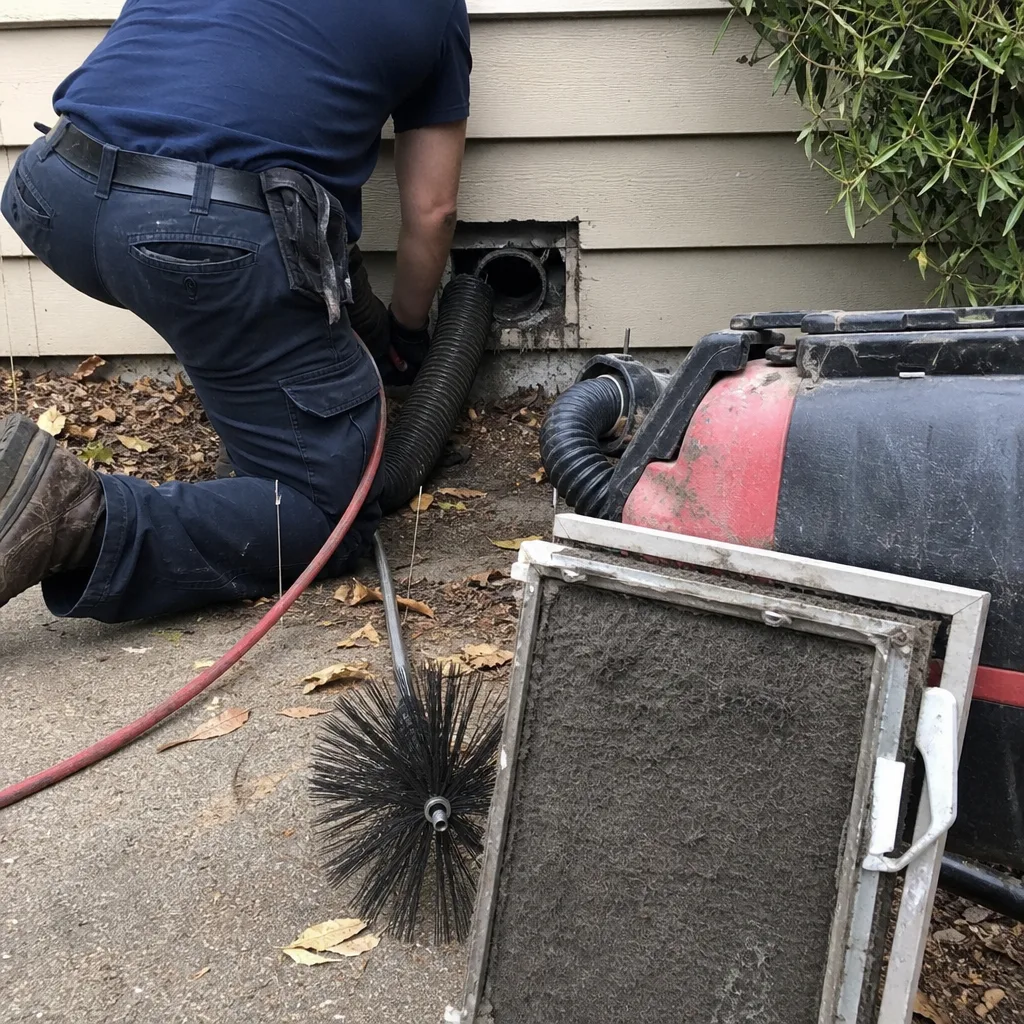 Before
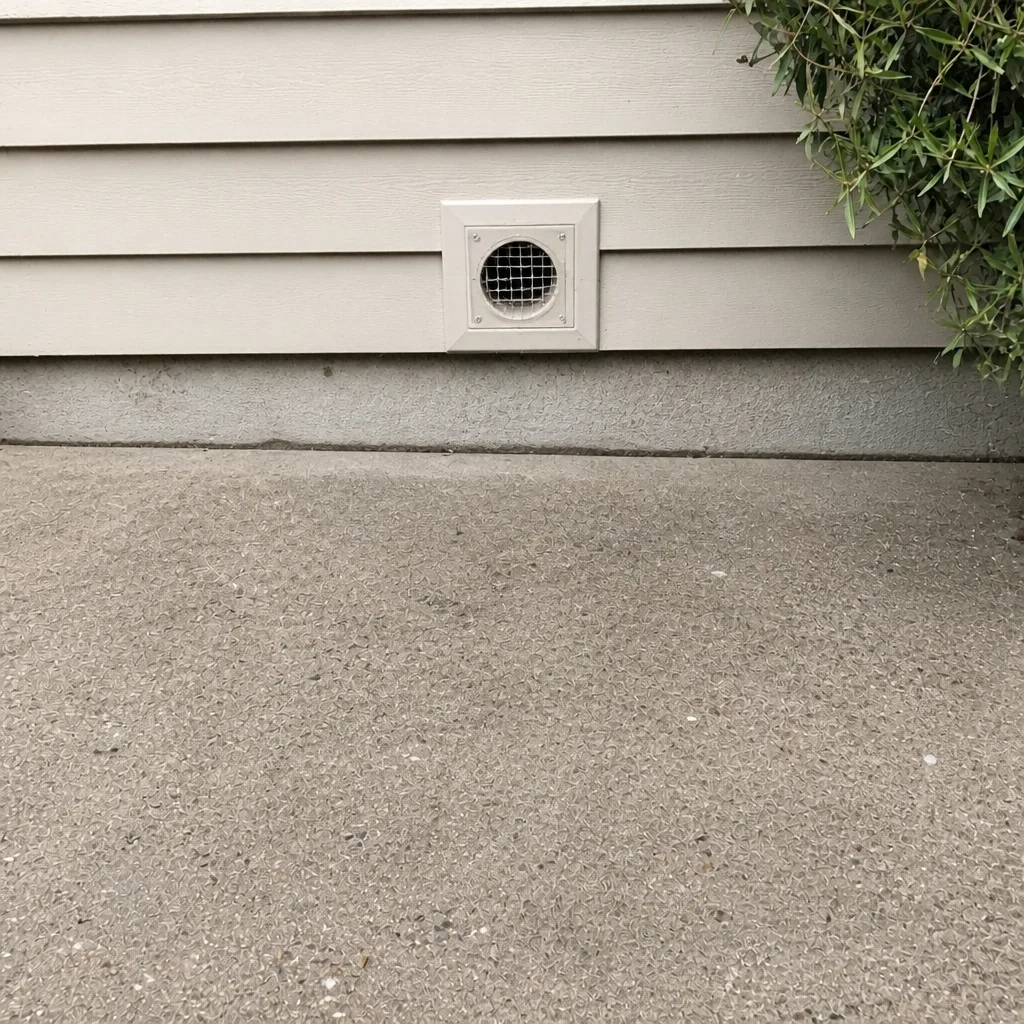 After
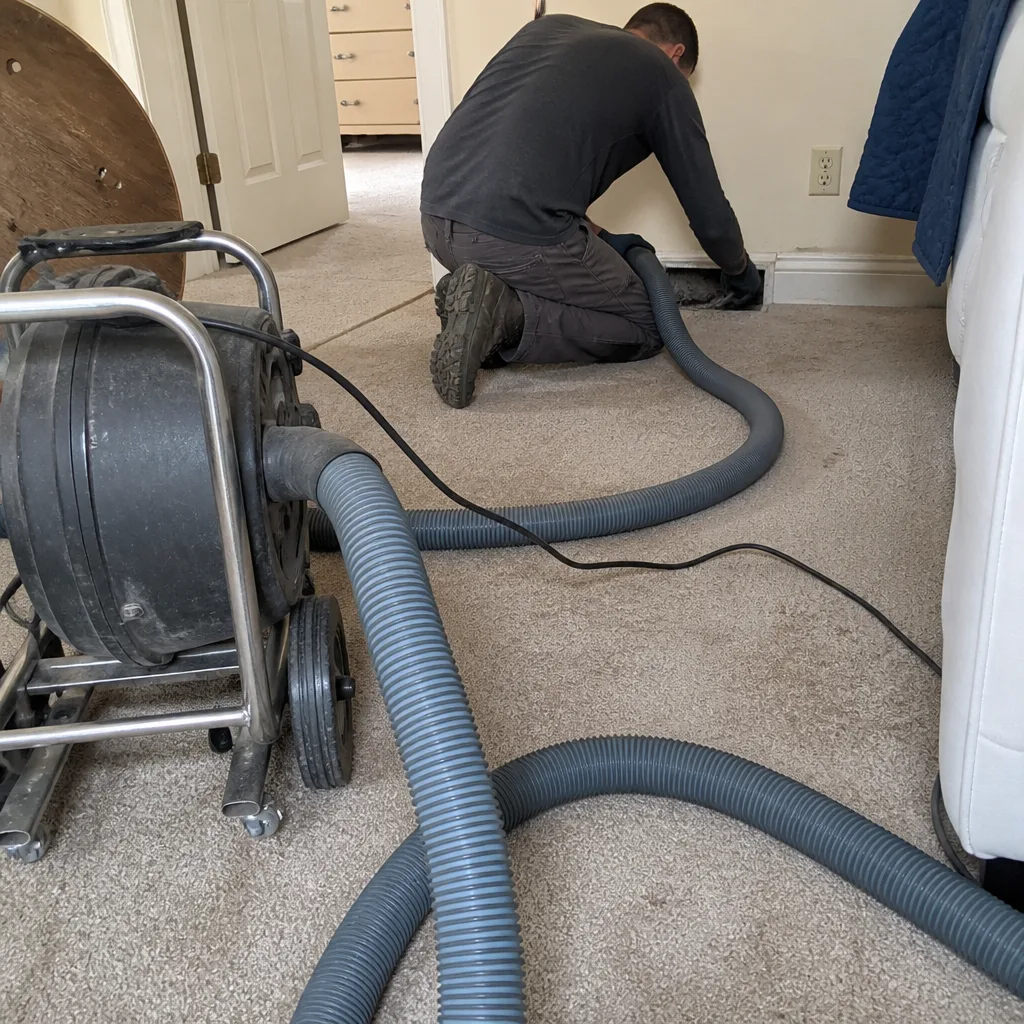 Before
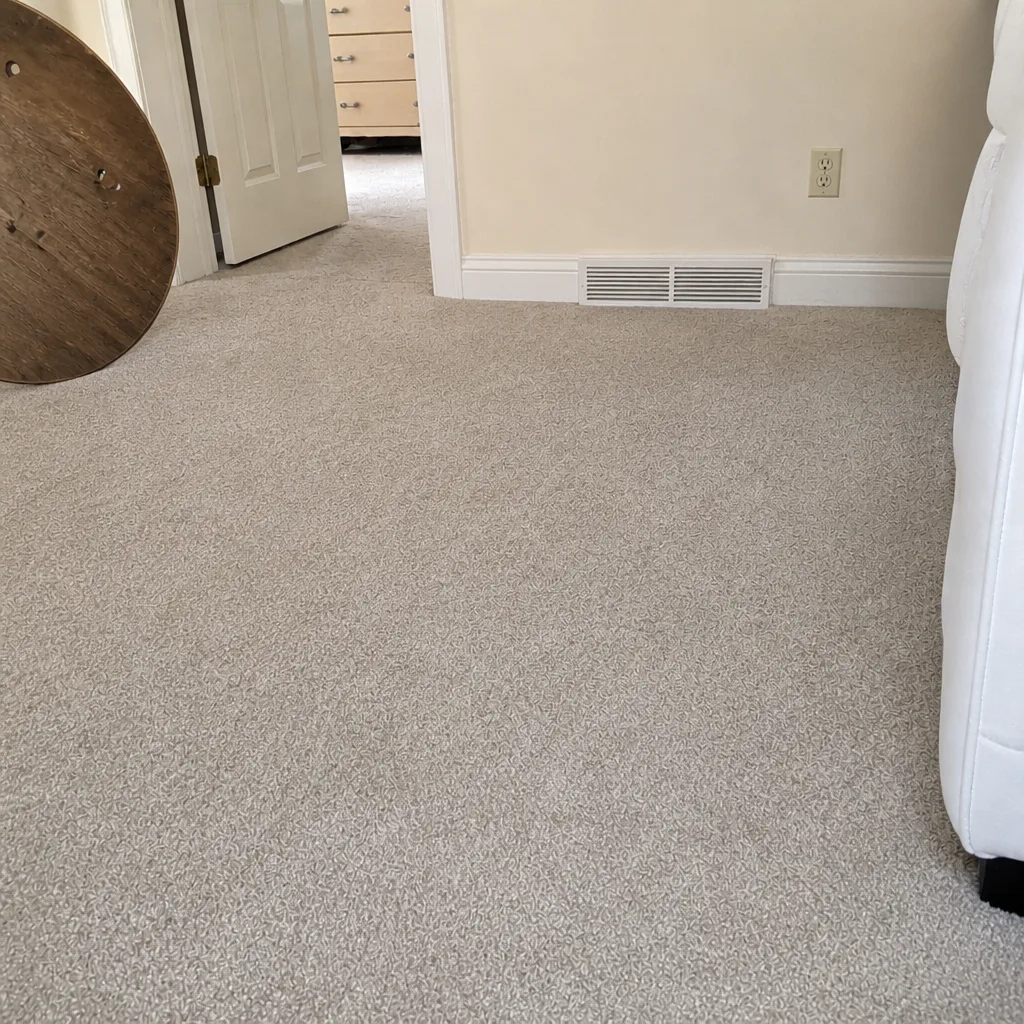 After
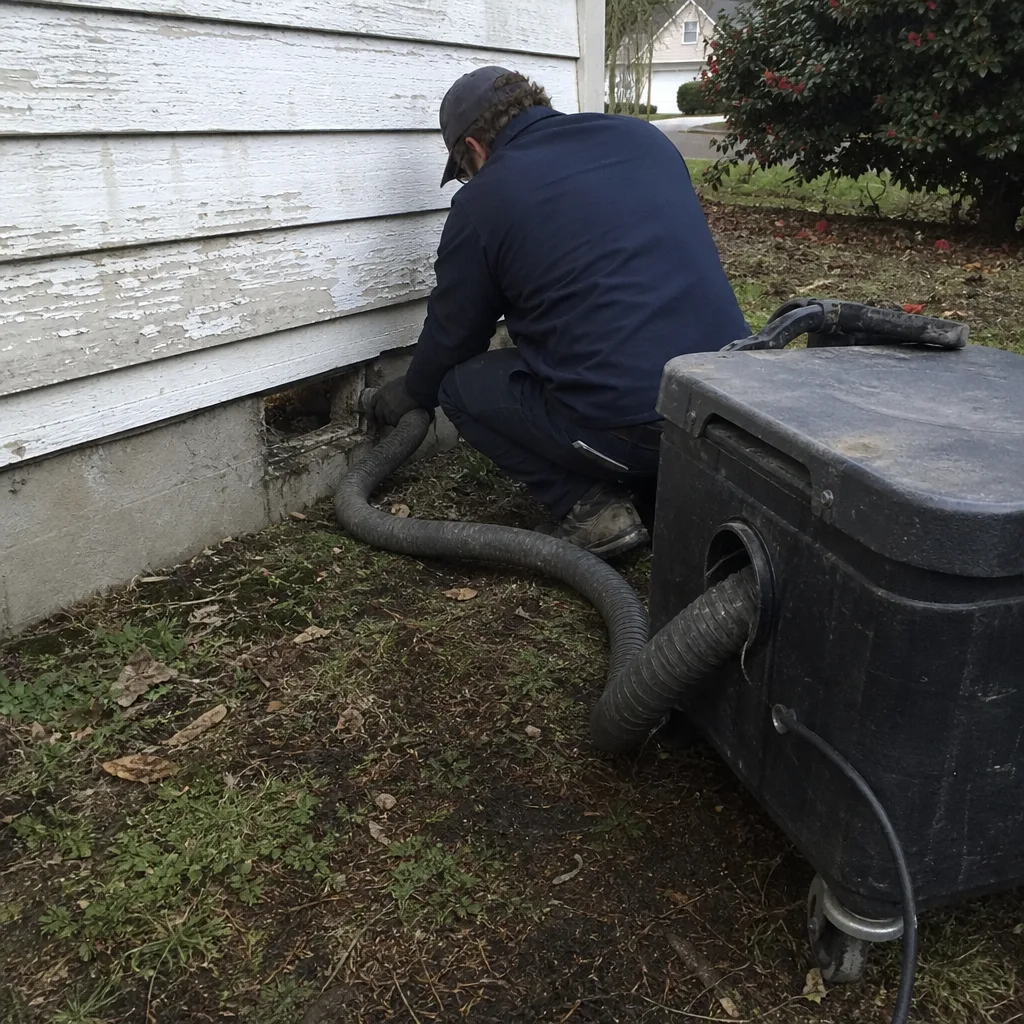 Before
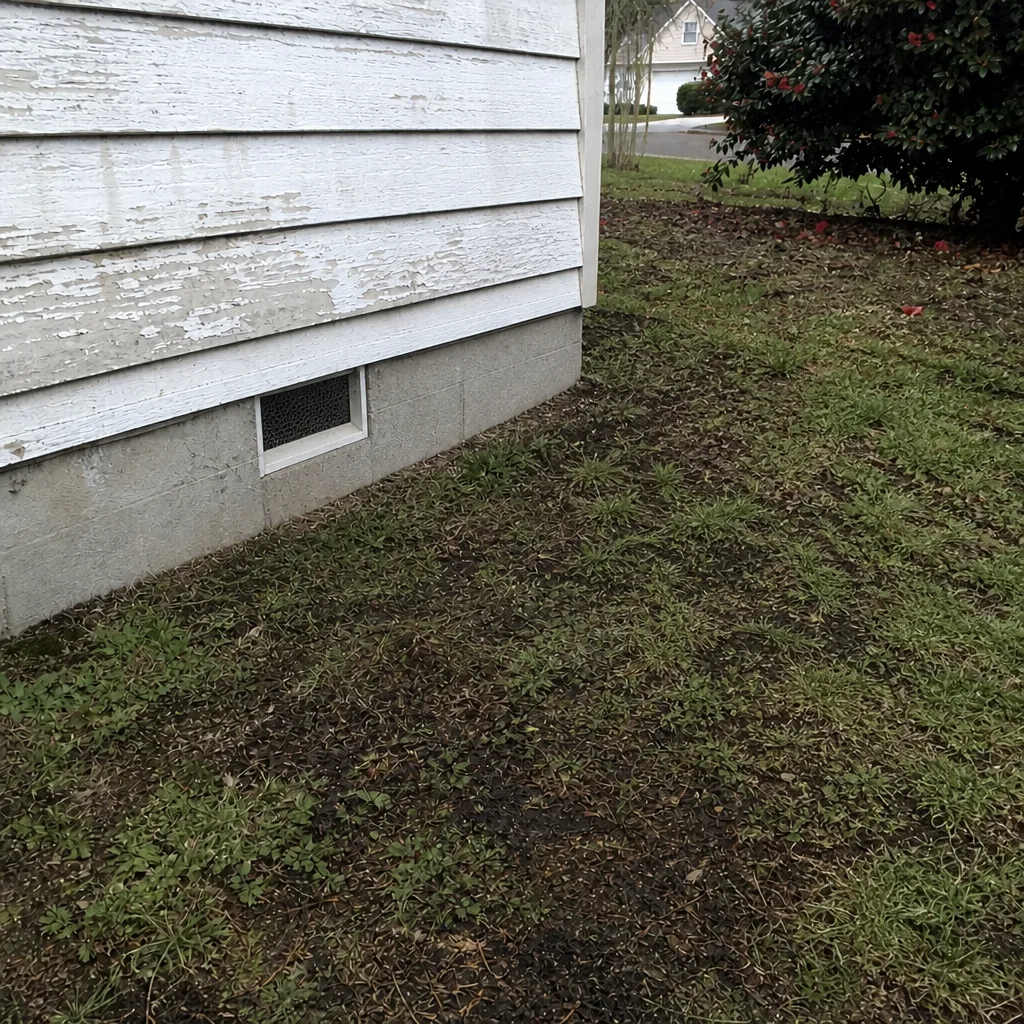 After
When to Call a Professional
Call when the symptoms are structural and the diagnostic is getting beyond what you can see with a flashlight. Call when you have animal intrusion, visible microbial growth, a persistent musty smell that returns after filter changes, or a room that’s been under-ventilated for years with no obvious cause. Call when you’ve had a blow-and-go cleaning that made airflow worse. And call when the system hasn’t been serviced in a decade and you’re seeing heavy dust on registers and return grilles. Duct Cleaning Hillsboro offers free estimates in Hillsboro. Call (866) 810-7564. We answer 24/7. Fast dispatch from 7am to 7pm, Sunday through Friday. We repair what we find, clean with contact and HEPA extraction, and photograph before and after so you can see the difference.
Frequently Asked Questions
Air duct cleaning in Hillsboro typically runs as a flat per-system price quoted in writing before work starts, not a per-vent figure. We give one price for the whole system, so the number doesn’t change based on how many registers your home has. The written estimate sets the final price. If a company quotes per vent, ask what happens if the count is higher than they expected on-site; the per-vent model is how most bait-and-switch invoices happen. Call (866) 810-7564 for an exact quote; estimates are free.
Because they’re quoting a different service. A coupon cleaning often means a blower shot through the system with no containment, no HEPA capture, no contact cleaning, and no before-and-after photos. That method moves debris around the system rather than removing it, and the result is exactly the uneven-airflow problem this guide describes. Ask what equipment the technician will bring on-site. If the answer doesn’t include rotary contact cleaning and HEPA extraction, the price reflects a different job. Call (866) 810-7564 to talk through what your system actually needs before you book.
Before-and-after photos of the interior of your own duct runs are the most honest answer. A professional service documents what was removed, verifies airflow at the registers, and shows you the photos before closing up. Ask for that as part of the service, not as a special request. In a home where the ducts haven’t been serviced in a decade, the photos are often dramatic. Call (866) 810-7564 for an estimate and we’ll explain what our documentation looks like.
Most homes can go several years between cleanings if the system is in good condition. Homes with pets, recent renovations, or a return sealed to a damp crawlspace tend to need it more often. There’s no fixed rule. The honest diagnostic is what’s on the registers, what’s in the return, and whether anyone in the home has new or worsening allergy complaints when the HVAC runs. If a company is telling you every year regardless of your system, ask what specifically they saw that justifies the schedule. Call (866) 810-7564 for a diagnostic conversation.
A large share of Hillsboro homes were built in the 1970s through 1990s with flexible duct runs in the attic or crawlspace, and those runs sag and kink with age. The sag restricts airflow to specific rooms in a way cleaning alone doesn’t fix. Repairing or replacing the affected runs is the correct fix. When we’re on site we evaluate the flex duct before recommending the scope of work. That’s why we offer air duct repair in-house; the diagnosis and repair happen on one visit. Call (866) 810-7564 to schedule an evaluation.
No. A musty smell means moisture and likely microbial growth somewhere in the system, and it won’t clear up on its own. Filter changes won’t touch it. The right response is a diagnostic to locate the moisture source, cleaning to remove the growth, and a fix for whatever is causing the moisture (drain issue, oversized system, unsealed return in a damp space). Pairing cleaning with Honeywell or Aprilaire humidity control resolves it at the source. Call (866) 810-7564. We answer 24/7 and fast dispatch runs from 7am to 7pm, Sunday through Friday.
The Bottom Line
Most of what homeowners try to fix in the duct system comes down to a handful of causes. Contamination responds to contact cleaning and HEPA extraction. Integrity problems like sagging flex duct, disconnected joints, or a breached plenum need repair. Odors point you toward the cause: musty means moisture, animal smell means inspection for intrusion, exhaust smell means call for appliance diagnostics before anything else. Read your system’s symptoms carefully, inspect what you can see, and get a professional diagnostic before you pay for a cleaning that might not address the real problem. Clean ducts, confirmed by documentation, is what the service should deliver. If you’re in Hillsboro and the symptoms don’t add up, call us.
Duct Cleaning Hillsboro covers duct cleaning, dryer vent cleaning, and duct repair across the area. If you’re comparing services in Hillsboro, we’re happy to walk through the diagnostic with you before you commit to anything. Our technicians have up to 9 years of experience, use professional Rotobrush and Nikro equipment on every cleaning, and photograph the work before and after. Call (866) 810-7564 for a free estimate. We answer 24/7. Fast dispatch from 7am to 7pm, Sunday through Friday.
Written by the team at Duct Cleaning Hillsboro.